
 blog
Best Acne Treatments for Teens: A 2026 Guide
Table of Contents
- Why Teen Acne Happens and What Makes It Worse
- Best Acne Treatments for Teens by Acne Type and Severity
- Benzoyl Peroxide for Teen Acne: What It Does and How to Use It
- Building a Teenage Acne Skincare Routine That Sticks
- How Long Acne Treatments Take to Work (and What Progress Looks Like
- When to See a Dermatologist for Teen Acne
- Sensitive Skin, Skin Tone, and Confidence: What Else Matters
- Frequently Asked Questions
Last Updated: October 20, 2026
Why Teen Acne Happens and What Makes It Worse
Teen acne is a skin condition where hair follicles become clogged with oil and dead skin cells, leading to pimples, blackheads, and whiteheads. It shows up most often on the face, chest, and back during the teen years.
The trigger is hormonal. Puberty raises androgen levels, and those hormones tell the skin's oil glands to produce more sebum. Extra oil plus dead skin cells equals clogged pores. Add acne-causing bacteria and you get inflammation.
A few things make teen acne worse:
- Picking and squeezing, which pushes bacteria deeper and raises scarring risk
- Heavy, oil-based makeup and sunscreen that trap sebum
- Harsh scrubbing that strips the skin and triggers more oil
- Stress and skipped sleep, which many teens report affects their skin
Knowing the cause matters. It tells you which treatments actually work, and which ones just dry out the skin without fixing the root problem.
Best Acne Treatments for Teens by Acne Type and Severity
The best acne treatments for teens depend on what kind of acne you have. Mild blackheads need a different approach than deep, painful cysts. Matching the treatment to the acne type is the single biggest factor in getting results.
Here is how we group treatment options by severity:
| Acne Type | What It Looks Like | First-Line Approach | When to Escalate |
|---|---|---|---|
| Mild | Blackheads, whiteheads | Salicylic acid cleanser, spot treatment | No change after 8-12 weeks |
| Moderate | Papules, pustules (red bumps, pus-filled) | Benzoyl peroxide or adapalene | Worsening or new scarring |
| Severe | Nodules, cysts (deep, painful) | Dermatologist referral | Right away, not later |
Mild Acne: Blackheads and Whiteheads
For mild teen acne, start with a gentle cleanser plus a salicylic acid product. Salicylic acid is oil-soluble, so it gets into the pore and helps unclog it. A spot treatment with benzoyl peroxide handles the occasional inflamed pimple.
Keep it simple. One active ingredient at a time, applied to the whole face or the affected area, works better than stacking three products. A salicylic acid cleanser used once or twice daily is usually enough for blackheads and whiteheads. If the cleanser alone is not enough after a few weeks, add a leave-on salicylic acid treatment two or three nights a week rather than switching to a stronger wash.
Moderate Acne: Papules and Pustules
Moderate acne with red bumps and pus-filled pimples usually needs a stronger active. Benzoyl peroxide or an over-the-counter adapalene gel is a common starting point. Both reduce acne-causing bacteria and calm inflammation.
A practical way to choose between them: benzoyl peroxide is faster-acting on inflamed pimples and works well as a whole-face treatment or spot treatment, while adapalene is better for preventing new clogged pores and improving skin texture over time. Many teens do best with benzoyl peroxide in the morning and adapalene at night, but only after each has been introduced separately and tolerated.
Give each treatment a fair trial before switching. Most teens quit too early, then assume nothing works.
Severe Acne: Nodules and Cysts
Deep, painful lumps under the skin are a sign to see a dermatologist. Over-the-counter products rarely clear nodular or cystic acne, and waiting can lead to permanent scarring. A prescription treatment plan is the right move here.
Severe acne is not a matter of trying harder with drugstore products. It is a signal that the inflammation is deep enough to need professional assessment, and early treatment is the best way to reduce the risk of lasting scars.
Benzoyl Peroxide for Teen Acne: What It Does and How to Use It
Benzoyl peroxide for teen acne works by killing acne-causing bacteria on the skin and helping clear blocked pores. It also reduces inflammation, which is why it calms red, angry pimples.
The catch is irritation. Benzoyl peroxide can dry out skin and cause peeling, especially at higher strengths. Here is how we tell teens to use it:
- Start with a lower strength (2.5% to 5%) rather than jumping to 10%
- Apply a thin layer to the whole acne-prone area, not just the spots
- Use it once a day at first, then build up if skin tolerates it
- Moisturize afterward to offset dryness
- Expect some redness in the first couple of weeks
Benzoyl peroxide can bleach fabrics, so white pillowcases and towels are a smart swap. It is one small habit that saves a lot of ruined shirts.
Building a Teenage Acne Skincare Routine That Sticks
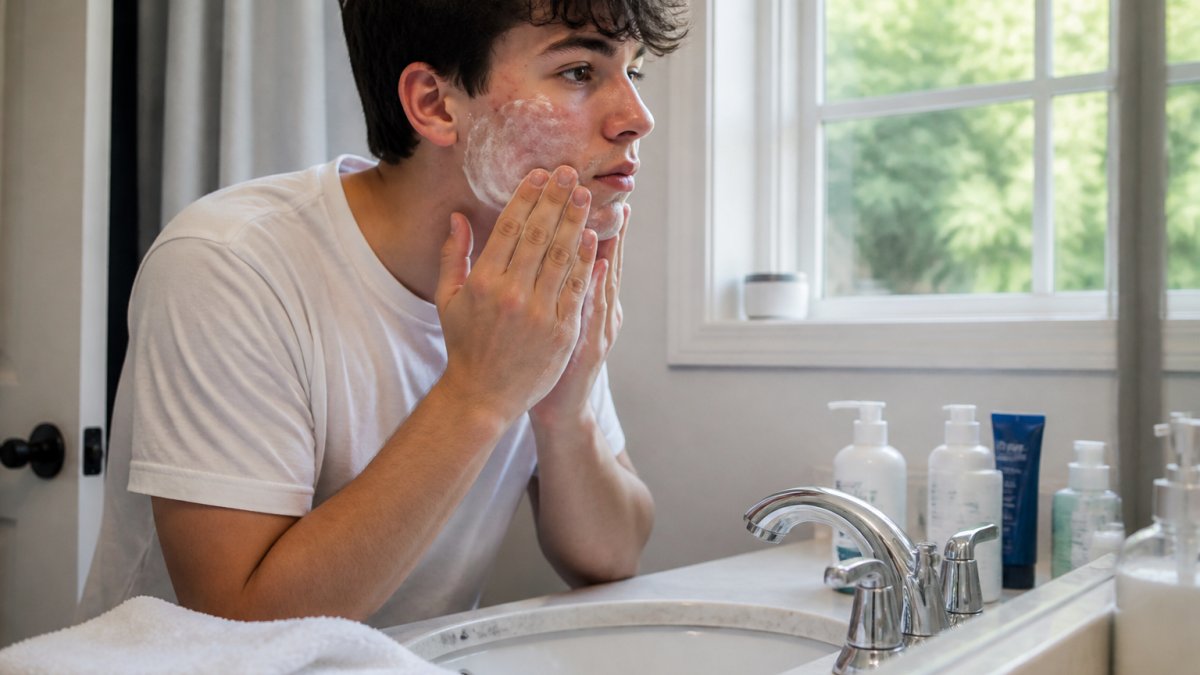
A teenage acne skincare routine works best when it has three steps and no more. Consistency beats complexity. A simple routine done every day outperforms an elaborate one abandoned after a week.
Step 1: Cleanse Gently, Twice a Day
Wash the face morning and night with a gentle, non-comedogenic cleanser. Use lukewarm water and fingertips, not a rough cloth. Overwashing strips the skin and can make oil production worse.
Step 2: Treat With One Active Ingredient
Apply one treatment, such as benzoyl peroxide or salicylic acid, to the whole acne-prone area. Start with a few times a week and build up. One active at a time lets you see what actually helps.
Step 3: Moisturize and Protect
Use an oil-free, non-comedogenic moisturizer, then a sunscreen every morning. Sun protection matters because some acne treatments make skin more sun-sensitive, and picking at sunburned skin worsens scarring.
How Long Acne Treatments Take to Work (and What Progress Looks Like
Teen acne treatments typically take 6 to 12 weeks to show clear results. That timeline surprises people. Skin cells turn over slowly, and inflammation takes time to settle.
Here is what realistic progress looks like:
- Weeks 1-2: Possible dryness or mild irritation as skin adjusts
- Weeks 3-4: Fewer new inflamed pimples, though some may still appear
- Weeks 6-8: Noticeable reduction in blackheads and whiteheads
- Weeks 8-12: Clearer skin and fewer flare-ups if the routine is consistent
A common mistake is judging a treatment after two weeks and quitting. Stick with one approach for at least eight weeks before deciding it does not work. Take a photo each week so progress is easier to see.
When to See a Dermatologist for Teen Acne
See a dermatologist for teen acne when over-the-counter treatment has not worked after 8 to 12 weeks, or when acne is severe, painful, or leaving scars. Deep nodules and cysts are a clear signal to get professional help.
Other reasons to book a visit:
- Acne that is worsening despite consistent home care
- Signs of scarring or dark marks that linger
- Acne affecting confidence, mood, or daily life
- Acne on the chest or back that resists treatment
A dermatologist can prescribe stronger topical or oral treatments. Professional acne-focused facials can also support a home routine by deep-cleaning pores and calming inflammation. For teens, we require parental consent before any service.
Sensitive Skin, Skin Tone, and Confidence: What Else Matters
Sensitive skin needs a slower start. Introduce one new product at a time, patch test first, and choose fragrance-free, non-comedogenic formulas. If a product stings or burns, stop it.
A gradual introduction schedule helps sensitive skin adjust without a flare-up:
- Week 1: Use the new active twice a week, at night, on top of moisturizer if the skin is easily irritated.
- Week 2: Move to every other night if there is no stinging, peeling, or redness.
- Week 3-4: Increase to nightly use only if the skin stays calm.
- If irritation appears: Drop back to the last comfortable frequency for a week before trying again.
Combining active ingredients is where many teens get into trouble. Benzoyl peroxide and salicylic acid can be used in the same routine, but not layered on the same night at first. Alternate them by day, and avoid stacking a retinoid with either one until the skin has adjusted to each product on its own.
Skin tone matters too. In darker skin, acne can leave dark marks called post-inflammatory hyperpigmentation. These fade slowly and are easier to prevent than treat, so early, gentle care pays off. Daily sunscreen is essential here. Aggressive scrubbing, picking, and high-strength acids can worsen discoloration by triggering more inflammation, so a gentle routine is not just comfort care, it is part of preventing dark marks.
Confidence is part of the picture. Acne affects how many teens feel about themselves, and that is a real concern, not vanity. Support matters: remind teens that acne is common and treatable, and that it is not their fault. If acne is causing persistent distress, withdrawal from friends, or avoidance of school and social events, talking to a pediatrician, school counselor, or mental health professional is a reasonable next step.
According to the American Academy of Dermatology's acne guidance, acne is the most common skin condition, and early, consistent treatment helps prevent scarring. The FDA's consumer information on acne products also notes that many acne treatments take weeks to work, which is why patience is part of the plan.
Frequently Asked Questions
What are the best acne treatments for teens?
The best acne treatments for teens depend on acne type and skin sensitivity. For mild blackheads and whiteheads, a salicylic acid cleanser or adapalene gel works well. For inflamed pimples, benzoyl peroxide targets acne-causing bacteria and inflammation. Teens with sensitive skin should start with one active ingredient at a low strength, applied every other day, and pair it with a gentle cleanser and non-comedogenic moisturizer. Severe or persistent acne needs a dermatologist, who may prescribe stronger topical or oral treatments.
How long do acne treatments take to work for teens?
Most over-the-counter acne treatments take 6 to 12 weeks of consistent use before you see clear improvement. Benzoyl peroxide may reduce inflammation within a few weeks, while adapalene and other topical retinoids often take 8 to 12 weeks and can cause mild dryness or peeling early on. Teens should not stop treatment after two weeks because progress is slow. Take photos every two weeks to track changes, and give each product at least two months before deciding whether it works.
When should a teen see a dermatologist for acne?
A teen should see a dermatologist if acne is severe, with deep nodules or cysts, or if it leaves scars. Also book an appointment if over-the-counter treatments have not worked after 8 to 12 weeks, or if acne is causing significant distress or affecting confidence. A dermatologist can prescribe stronger topical retinoids, antibiotics, or other treatments that are not available over the counter. Early treatment for severe acne lowers the risk of permanent scarring.
Can teens use salicylic acid or retinoids for acne?
Yes, teens can use salicylic acid and adapalene, an over-the-counter topical retinoid, for acne. Salicylic acid unclogs pores and works well for blackheads and whiteheads. Adapalene helps prevent clogged pores and reduces inflammation. Start with one product at a time, use a pea-sized amount for the whole face, and apply moisturizer and sunscreen daily. If irritation is strong, use the product every other night until skin adjusts. A dermatologist can advise if prescription retinoids are needed.
Acne can feel overwhelming, especially when nothing at home seems to help. At Toni Roc Beauty, our team builds customized treatment plans for teens and adults, with personalized care and professional acne-focused facials designed around your skin. We require parental consent for teen services and take the time to understand your goals. Book now with Toni Roc Beauty and start a routine that actually fits your skin.