 how-to
How to Find the Best Facial Spa Near Me
Last Updated: October 23, 2026
Quick Summary
The best facial spa near you employs licensed estheticians who customize treatments based on your skin type and concerns rather than applying one-size-fits-all facials. Look for providers with current state licenses, advanced certifications, strict sanitation protocols, and a consultation process that includes detailed skin analysis before recommending treatment.
- Estheticians must hold a current state license and typically complete 600-1,200 hours of formal training depending on your state.
- Quality spas use disposable tools, sterilize non-disposable equipment between clients, and maintain fresh linens and clean workspaces.
- Ask potential spas about their experience treating your specific skin concern and request to see esthetician credentials before booking.
- Read reviews for specific details and patterns rather than just star ratings, and watch for red flags like repeated complaints about the same issue.
- Prices vary by treatment type, esthetician experience, and location, so focus on value and customization rather than choosing the cheapest or most expensive option.
Table of Contents
- What to Look for in the Best Facial Spa Near Me
- Understanding Facial Spa Services and Treatment Options
- Evaluating Facial Spa Reviews and Ratings
- Key Facial Consultation Questions to Ask Before Booking
- Understanding Facial Spa Prices and Value
- Your Checklist for Evaluating a Facial Spa
- Frequently Asked Questions
What to Look for in the Best Facial Spa Near Me
Finding the best facial spa near you starts with knowing what separates quality providers from the rest. The most important factor isn't location or price alone, it's whether the spa has trained professionals who understand your skin and customize treatments accordingly.
When you walk into a quality facial spa, you'll notice the difference immediately. The estheticians ask detailed questions about your skin history, concerns, and goals. They don't apply a one-size-fits-all facial to everyone.
Esthetician credentials and licensing
Esthetician licenses are mandatory in every state. Your provider must hold a current, valid license issued by their state's cosmetology board.
Licensed estheticians complete formal training, typically 600-1,200 hours depending on your state. They study skin anatomy, chemistry, and safe treatment protocols.
Beyond the basic license, look for additional certifications:
- Advanced certifications in specific treatments (microdermabrasion, chemical peels, laser therapy)
- Continuing education courses in skin health and emerging treatments
- Specialized training in treating sensitive skin, rosacea, or acne-prone skin
- Memberships in professional organizations like the National Association of Skin Care Professionals
Ask your spa directly: "What certifications do your estheticians hold?" A confident provider will list them without hesitation.
Hygiene and sanitation standards
This is where you need to be direct. Facial spas work with your skin barrier, which is your body's first line of defense. Poor sanitation can cause infections, breakouts, or skin reactions.
Here's what to observe or ask about:
- Disposable tools and applicators. Single-use items should never be reused. Spatulas, applicator sticks, and headbands must be new for each client.
- Sterilized equipment. Non-disposable tools (extractions, microdermabrasion tips) should be autoclaved or chemically sterilized between clients. Ask how they sterilize.
- Clean workspace. Linens should be fresh and laundered between appointments. The treatment room should smell clean, not perfumed to mask odors.
- Hand hygiene. Your esthetician should wash hands or wear fresh gloves before touching your face.
A reputable spa will welcome these questions. They understand that hygiene builds trust. If a provider seems annoyed or defensive when you ask about sanitation, find another spa.
Understanding Facial Spa Services and Treatment Options
Not all facials are the same. The best facial spa near you offers a menu of options because different skin types and concerns need different approaches.
Common facial treatments include:
- Classic European facials. Cleanse, exfoliate, extract, massage, and moisturize. Good for routine maintenance and mild congestion.
- Chemical peels. Acid-based treatments that dissolve dead skin cells. Effective for texture, discoloration, and mild acne scars.
- Microdermabrasion facials. Physical exfoliation using tiny crystals or a diamond tip. Works well for dull skin and surface damage.
- Hydrating facials. Focused on moisture infusion for dry or dehydrated skin. Often include serums and masks.
- Acne-focused facials. Specialized protocols for breakout-prone skin, with antibacterial products and gentle extraction.
The best spa will discuss which treatment matches your skin. They won't push the most expensive option, they'll recommend what your skin actually needs.
Matching treatments to your skin type and concerns
This is where customization happens. Before booking, know your skin type and your main concern.
Skin types:
- Oily skin. Tends toward excess sebum, enlarged pores, and breakouts. Benefits from exfoliation and pore-clearing treatments.
- Dry skin. Feels tight, may flake or itch. Needs hydration and barrier support.
- Combination skin. Oily in some zones, dry in others. Requires balanced treatment that doesn't over-dry or over-moisturize any area.
- Sensitive skin. Reacts easily to products or treatments. Needs gentle, fragrance-free options and patch testing.
- Normal skin. Balanced, minimal sensitivity. Can tolerate most treatments.
Common skin concerns and what helps:
- Acne or breakouts. Look for facials with salicylic acid, benzoyl peroxide, or gentle extraction. Avoid heavy oils.
- Rosacea or redness. Needs calming, anti-inflammatory treatments. Avoid heat, strong acids, or aggressive scrubbing.
- Hyperpigmentation or dark spots. Vitamin C, niacinamide, or chemical peels can help. Sunscreen is essential afterward.
- Fine lines or loss of elasticity. Retinol, peptides, or radiofrequency treatments stimulate collagen.
- Dull texture. Exfoliation, hydration masks, or light peels restore radiance.
A quality spa will ask about all of this. They'll also do a skin analysis, looking at your skin under magnification to assess hydration, sensitivity, and breakout patterns. This takes time, but it's how they customize your treatment.
Evaluating Facial Spa Reviews and Ratings
Online reviews tell you a lot, but not everything. You need to know how to read them critically.
Start by checking multiple platforms: Google, Yelp, Instagram, and the spa's own website. Look for patterns across reviews, not just the star rating.
Red flags in reviews:
- Repeated complaints about the same issue (e.g., "esthetician didn't listen to my concerns" appearing in multiple reviews)
- Vague positive reviews that sound generic or written by staff ("Amazing experience!" with no detail)
- Complaints about cleanliness or hygiene
- Negative experiences with pressure to buy products or upgrades
- Long wait times or last-minute cancellations
Green flags:
- Specific details about what the esthetician did and how it helped
- Mentions of the esthetician remembering preferences or skin history from previous visits
- Reviews that acknowledge both strengths and minor drawbacks (realistic, not fake-perfect)
- Consistent praise for listening and customization
- Positive comments about product recommendations being honest, not pushy
How to spot authentic reviews and red flags
Fake reviews sound generic. They use phrases like "Amazing experience," "Highly recommend," or "Best spa ever" without explaining why.
Look at the review timeline. If a spa suddenly got 10 five-star reviews in one week, that's suspicious. Real reviews come in gradually.
Check reviewer history. Does this person review many businesses, or just this one? Do their other reviews sound authentic?
Watch for review manipulation. Some spas ask clients to leave reviews in exchange for discounts.
Read negative reviews carefully. Are the complaints about things that matter to you?
Key Facial Consultation Questions to Ask Before Booking
Before your first appointment, call or email the spa with these questions. Their answers will tell you whether they're the right fit.
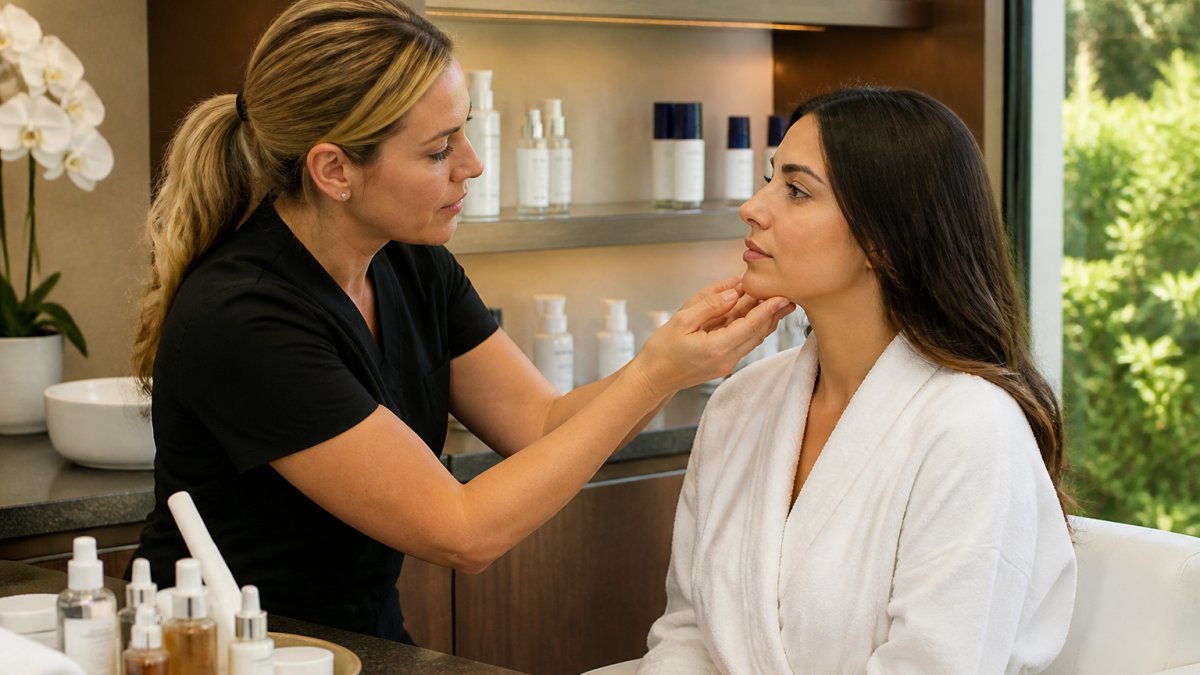
About your skin:
- "Can you do a skin analysis before recommending a treatment?" (Good spas will assess your skin first, not assume.)
- "Do you offer patch testing for clients with sensitive skin?" (This prevents allergic reactions.)
- "What's your experience treating [your specific concern, acne, rosacea, hyperpigmentation]?" (You want someone familiar with your issue.)
About the treatment:
- "Which facial would you recommend for my skin type, and why?" (Listen for customization, not a sales pitch for the most expensive option.)
- "What should I expect during and after the treatment?" (Professional spas explain what happens and set realistic expectations.)
- "How often should I get facials to see results?" (Honest answer: routine maintenance is monthly, but results take 3-6 months for deeper concerns.)
About the spa:
- "Are your estheticians licensed, and do they have any specialized certifications?" (Always ask to see proof.)
- "How do you sterilize your equipment?" (Listen for specific protocols, autoclave, chemical sterilization, or disposable tools.)
- "What's your cancellation policy?" (Understand the rules before booking.)
- "Do you carry retail products, and is there pressure to buy?" (You should feel informed, not pressured.)
About your preferences:
- "Can I request the same esthetician for future appointments?" (Consistency matters. Your esthetician should remember your skin and preferences.)
- "Do you offer any introductory rates for new clients?" (Many spas do, and it's a low-risk way to try them.)
Understanding Facial Spa Prices and Value
Price varies widely depending on location, treatment type, and spa reputation. Don't assume the most expensive spa is the best, and don't assume the cheapest is a bargain.
What influences pricing:
- Treatment type. A basic European facial costs less than a specialized peel or microdermabrasion facial.
- Esthetician experience. Senior estheticians with certifications often charge more than newer staff.
- Spa location and overhead. Urban spas and luxury facilities charge more than neighborhood spas.
- Product quality. Spas using high-end skincare lines charge more than those using basic products.
- Appointment length. A 60-minute facial costs less than a 90-minute treatment with extras like massage or masks.
What influences pricing and add-on costs
Most spas offer packages or memberships for regular clients. These usually offer better value than paying per visit. Ask about:
- Package deals. Buy 5 facials, get one free. Or prepay for a series and save 10-15%.
- Membership programs. Monthly memberships often include a facial plus discounts on products or additional services.
- Seasonal promotions. New client discounts, holiday specials, or referral bonuses.
Add-on costs to expect:
- Retail products. Skincare recommended for home use. Prices vary, but budget $30-100 per product.
- Extra services. Add-ons like neck massage, hand treatment, or LED light therapy often cost $15-30 more.
- Gratuity. Tip 18-20% if you're happy with the service.
The best value isn't always the lowest price. It's the spa that listens to your skin, delivers results, and doesn't oversell you products you don't need. At ToniRoc Beauty, we focus on what your skin actually needs, not on upselling.
Your Checklist for Evaluating a Facial Spa
Use this checklist before booking your appointment. Check off each item as you verify it.
| Evaluation Criteria | What to Look For | Status |
|---|---|---|
| Esthetician License | Current state license visible or verifiable | ☐ |
| Certifications | Advanced training in your skin concern (acne, anti-aging, sensitive skin) | ☐ |
| Sanitation Practices | Disposable tools, sterilized equipment, clean workspace | ☐ |
| Customization | Spa recommends treatment based on your skin, not a standard package | ☐ |
| Consultation | Esthetician asks detailed questions before treatment | ☐ |
| Reviews | Specific, detailed positive feedback across multiple platforms | ☐ |
| Experience with Your Concern | Spa has treated your specific skin issue successfully | ☐ |
| Communication | Staff answers your questions directly and honestly | ☐ |
| Consistency | Option to see the same esthetician for continuity of care | ☐ |
| Pricing Transparency | Prices clearly listed; no hidden fees or aggressive upselling | ☐ |
Finding the best facial spa near you comes down to three things: trained professionals, clean facilities, and personalized care. Don't settle for a spa that treats everyone the same. Your skin is unique, and your treatment should reflect that. Learn more about proper esthetician credentials and licensing standards to verify your provider's qualifications, and book your personalized consultation with us today.
Frequently Asked Questions
What should I ask before booking a facial at a facial spa?
Ask about the esthetician's credentials, the specific treatment you'll receive, whether it's customized for your skin type, what products will be used, expected results and timeline, aftercare instructions, and the spa's cancellation policy. Request a skin consultation before your first appointment so the esthetician can assess your skin and address specific concerns like sensitivity, acne, or rosacea.
How can I tell if a facial spa is reputable?
Check that estheticians hold valid state licenses and that the spa follows sanitation protocols. Read recent customer reviews on multiple platforms, noting whether reviewers mention customized service and results. Visit the location to observe cleanliness and professionalism. Reputable spas offer consultations, ask detailed questions about your skin, and don't apply the same treatment to everyone.
What facial spa services should I expect to find?
Quality facial spas typically offer a range of services including basic facials, chemical peels, microdermabrasion, hydrating treatments, acne-focused facials, and anti-aging options. Many provide specialized treatments for sensitive skin, rosacea, or texture concerns. Look for spas that offer customized facials rather than one-size-fits-all treatments, and verify they conduct a thorough skin consultation before recommending services.
How do facial spa prices compare, and what affects the cost?
Facial spa pricing depends on the treatment type, esthetician experience, location, and whether products or add-ons are included. Basic facials typically cost less than specialized treatments like chemical peels or advanced skincare services. Premium spas may charge more for personalized consultations, high-quality products, and experienced staff. Ask whether your initial consultation is complimentary and what's included in each service before booking.