 ultimate-guide
The Best Skincare Routine for Bridal Prep
Last Updated: October 26, 2026
Quick Summary
The best skincare routine for bridal prep begins six months out, builds a consistent daily regimen of gentle cleanser, moisturizer and SPF 30 or higher, and layers in professional treatments at the right intervals. Facials should be spaced four to six weeks apart, with the final calming facial two to three weeks before the wedding.
- Start with three products only: a gentle cleanser, a moisturizer suited to your skin type, and broad-spectrum SPF 30 or higher.
- Introduce one new product at a time and give it two weeks before adding the next.
- Book a series of facials starting three months out, spaced four to six weeks apart.
- Stop retinol at least five to seven days out if your skin tends to flake or purge.
- Skip facials inside 72 hours and avoid first-time waxing, threading or lash lifts in the final week.
Table of Contents
- Why Bridal Skin Prep Starts Months Before the Dress Fitting
- Your Bridal Skin Prep Timeline From Six Months Out to the Week Of
- Building a Pre-Wedding Skincare Routine Around Your Skin Type
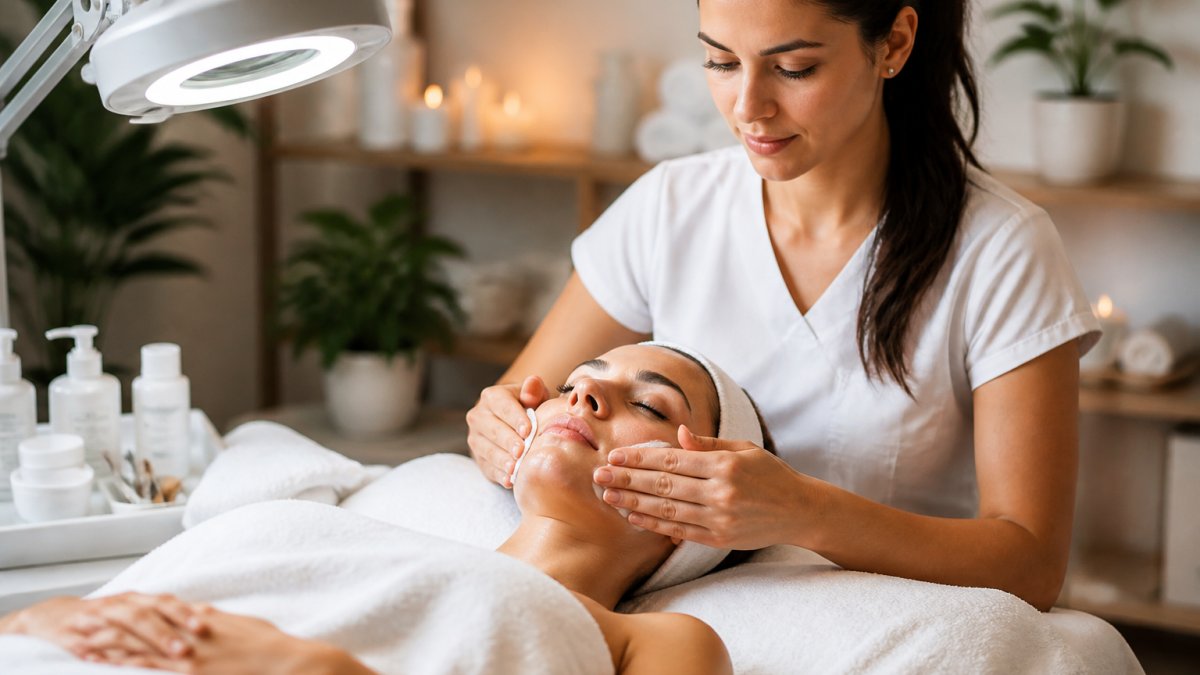
- What to Look for in a Pre-Wedding Facial, and When to Book It
- Ingredients That Earn Their Place and Ones to Skip
- Wedding Day Skin Prep for a Makeup Look That Lasts
- When to Stop DIY and See a Dermatologist
- Booking Your Bridal Skin Prep Consultation
- Frequently Asked Questions
Why Bridal Skin Prep Starts Months Before the Dress Fitting
The best skincare routine for bridal prep begins six months out, builds a consistent daily regimen, and layers in professional treatments at the right intervals. At ToniRoc Beauty, we understand that meaningful change to skin texture, tone, and hydration takes time. A facial two weeks out can calm a flare-up; it cannot rebuild a compromised barrier.
That is the part most bridal guides get wrong. The American Academy of Dermatology's guidance on caring for your skin points to the same fundamentals we start every bride with: gentle cleansing, daily moisturizer, and consistent sun protection.
Below, we break down the full bridal skin prep timeline, how to adapt it to your skin type, and what to book when.
Your Bridal Skin Prep Timeline From Six Months Out to the Week Of
A bridal skin prep timeline works backward from the wedding date. Six months gives you room to test products, recover from irritation, and fit in professional treatments at safe intervals. Three months is tighter; under a month, options narrow to gentle maintenance and hydration.
| Phase | Timing | Focus | Professional Treatments |
|---|---|---|---|
| Build the basics | 6 to 4 months out | Gentle cleanser, moisturizer, daily SPF | Baseline facial to assess skin |
| Add actives | 3 to 1 months out | Brightening serums, exfoliation, retinol | Series of facials spaced 4-6 weeks apart |
| Protect | Final month | Maintain barrier, no new products | One calming facial, 2-3 weeks out |
| Wedding week | 7 days out | Hydration, minimal disruption | None, or a gentle hydrating treatment early in the week |
Six to Four Months Out: Build the Basics
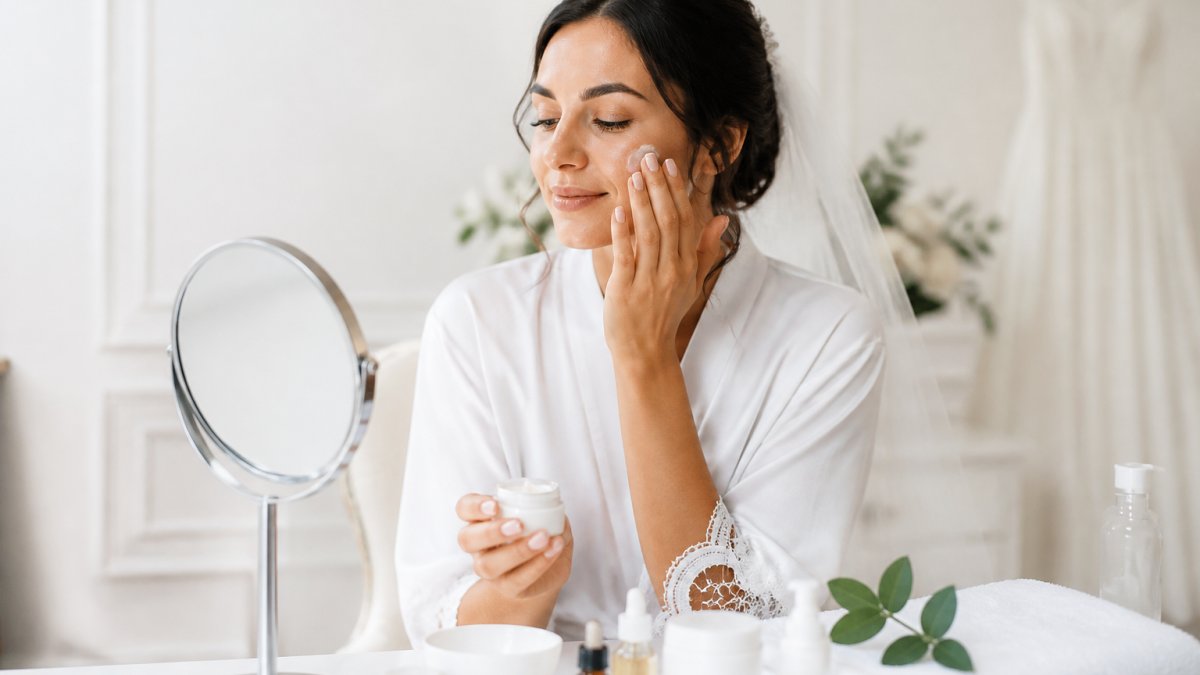
Start with three products and nothing more: a gentle cleanser, a moisturizer suited to your skin type, and a broad-spectrum sunscreen of SPF 30 or higher. The FDA's guidance on sunscreen is clear that broad-spectrum protection guards against both UVA and UVB damage, and daily use is what prevents new pigmentation from forming before the wedding.
This phase is about consistency, not intensity. A common mistake is buying five new products in week one and not knowing which caused the breakout in week three. Introduce one product at a time, give it two weeks, then add the next.
Three to One Months Out: Add Actives and Book Treatments
Once your base routine is stable, layer in actives: a brightening serum in the morning, a gentle exfoliant once or twice weekly, and retinol at night if your skin tolerates it. This is also when professional treatments earn their place: facials spaced four to six weeks apart let skin recover and show cumulative results.
If uneven texture is your main concern, our guide on how to fix uneven skin texture walks through a step-by-step approach.
The Final Month: Protect What You Have Built
Stop experimenting. The final month is for protecting the skin barrier, not chasing one more improvement. Keep your routine identical, skip any new acid or retinol strength, and book a single calming, hydrating facial two to three weeks out.
Building a Pre-Wedding Skincare Routine Around Your Skin Type
A pre-wedding skincare routine only works if it matches your skin: the same brightening serum that transforms dull, resilient skin can trigger a flare in rosacea-prone skin. Use the decision tree below to pick the path that fits your skin and concern.
Start With Your Primary Concern
Ask which of these is closest to your main worry, then follow that path. If you have more than one, treat the first as primary and add the second once it is stable.
| If your main concern is... | Start with | Add after 2-4 weeks | Avoid or use cautiously |
|---|---|---|---|
| Oiliness and clogged pores | Gentle foaming cleanser, lightweight non-comedogenic moisturizer, SPF | Salicylic acid cleanser or niacinamide serum | Heavy creams, occlusive balms |
| Dryness and flaking | Cream cleanser, ceramide moisturizer, SPF | Hyaluronic acid serum, gentle hydrating mask | Strong acids, alcohol-based toners |
| Sensitivity or redness | Fragrance-free cleanser, ceramide moisturizer, physical SPF | Azelaic acid or centella-based serum | Retinol, high-strength acids, essential oils |
| Acne-prone | Non-comedogenic cleanser and moisturizer, SPF | Adapalene or salicylic acid, niacinamide | Pore-clogging ingredients, harsh scrubs |
| Dullness and uneven tone | Gentle cleanser, moisturizer, SPF | Vitamin C in the morning, niacinamide | High-strength acids layered together |
| Combination skin | Gel-cream moisturizer, SPF | Zone-based treatment: salicylic on the T-zone, richer cream on cheeks | One heavy product for the whole face |
Oily and Acne-Prone Skin
Oilier skin tolerates more frequent exfoliation and benefits from lightweight, non-comedogenic moisturizers. Salicylic acid cleansers keep pores clear, and niacinamide serums calm oil production without stripping. Resist over-washing: stripping oil triggers more of it.
If you are using a prescription acne treatment, do not stop it abruptly before the wedding without talking to your prescriber; a sudden stop can trigger a flare.
Dry, Sensitive or Rosacea-Prone Skin
Sensitive and rosacea-prone skin needs fewer, gentler products. Fragrance-free formulas, ceramide-rich moisturizers, and physical sunscreens are the safer defaults. Patch test every new product on your jawline for three nights before full-face use.
For rosacea-prone skin, heat, alcohol, and spicy food are common triggers, so keep those in check in the final week. A gentle, calming facial two to three weeks out is safer than anything stronger.
Combination Skin
Combination skin is the most common pattern and the most often mis-treated. Rather than buying two full routines, use one gentle cleanser and one gel-cream moisturizer for the whole face, then treat zones: salicylic acid on the T-zone, a richer cream on the cheeks.
Skin Tone and Post-Inflammatory Hyperpigmentation
If you are prone to dark marks after a breakout or irritation, the priority is prevention: daily broad-spectrum SPF and gentle handling. Post-inflammatory hyperpigmentation fades slowly, and sun exposure makes it darker and longer-lasting.
Darker skin tones can be more prone to irritation and pigmentation from aggressive treatments, so introduce acids and retinoids slowly and patch test. If a treatment causes darkening rather than clearing, stop.
When to See a Dermatologist Instead
If your concern is persistent acne, sudden changes in a mole, unexplained rashes, or skin that reacts to everything, a dermatologist's evaluation is the right next step. Some concerns need a diagnosis before a routine can help.
What to Look for in a Pre-Wedding Facial, and When to Book It
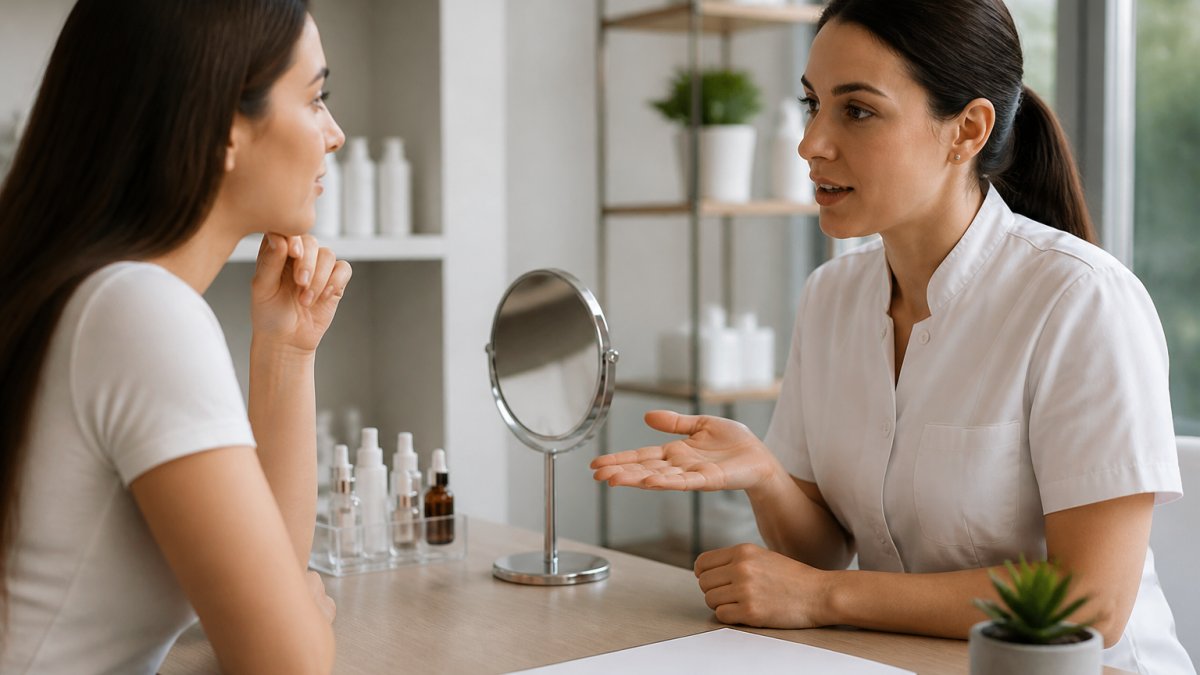
The best pre-wedding facial is customized to your skin on the day, not a standard protocol. Look for a provider who assesses your skin, asks about your routine and sensitivities, and adjusts accordingly.
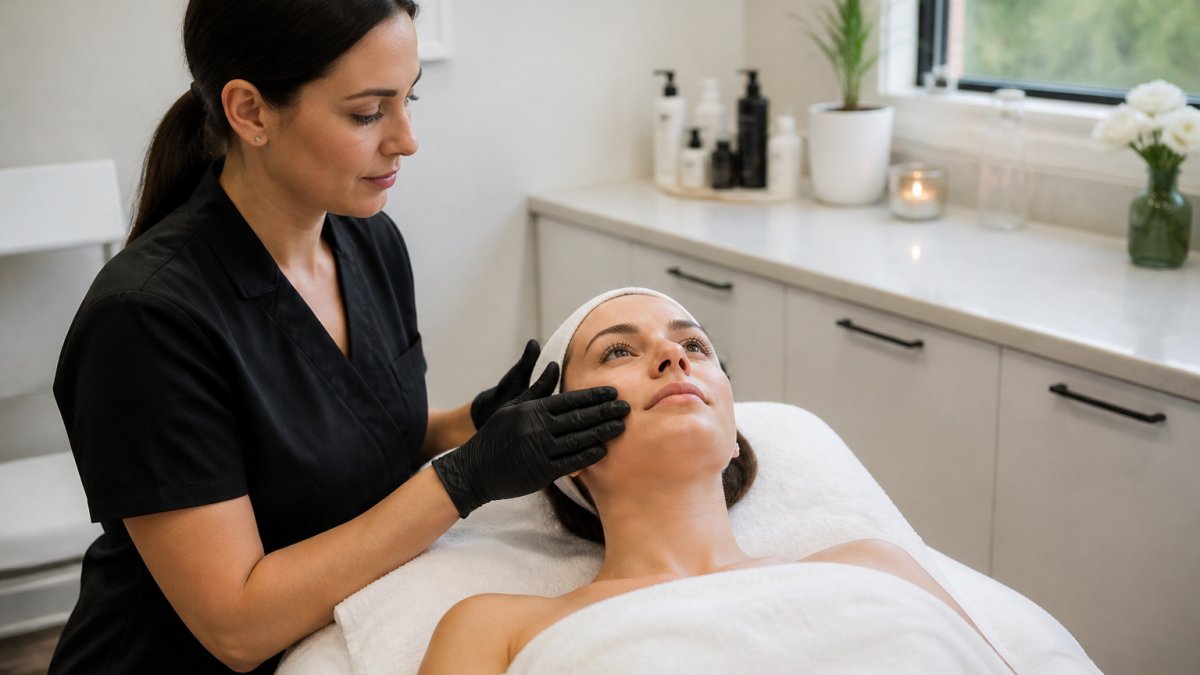
Ask direct questions before you book: What actives will you use? Our guide on how to find the best facial spa covers what to check, and you can review the services we offer to see which fits your timeline.
Watch out: booking a strong peel or aggressive extraction for the first time within two weeks of the wedding. If your skin reacts, there is no recovery window.
Ingredients That Earn Their Place and Ones to Skip
The ingredients worth your money are the boring, well-studied ones: sunscreen, a humectant like hyaluronic acid, niacinamide for tone and barrier support, and vitamin C as an antioxidant. Retinol earns its place for texture and fine lines, but only if introduced slowly and months out.
Skip anything marketed as an instant fix, high-strength acids you have never used, and new products in the final month.
Wedding Day Skin Prep for a Makeup Look That Lasts
Most bridal guides stop at "hydrate and don't try anything new." That is correct but not useful when you are seven days out and need a day-by-day plan. This is the final-week schedule we give brides, built around one rule: the last seven days are for protecting the skin barrier, not improving it. Real change takes weeks, so the only job now is to arrive with calm, hydrated, un-irritated skin.
The Final Seven Days: A Day-by-Day Schedule
| Day out | Morning | Evening | Avoid |
|---|---|---|---|
| 7 days | Gentle cleanser, moisturizer, SPF 30+ | Same routine; no actives stronger than usual | New products, strong peels, extractions |
| 6 days | Gentle cleanser, moisturizer, SPF | Hydrating mask if your skin tolerates it | Anything you have not patch-tested |
| 5 days | Gentle cleanser, moisturizer, SPF | Normal routine | Retinol if you are prone to flaking |
| 4 days | Gentle cleanser, moisturizer, SPF | Normal routine | Exfoliating acids stronger than your usual |
| 3 days | Gentle cleanser, moisturizer, SPF | Hydrating serum plus moisturizer | First-time facials, waxing on the face |
| 2 days | Gentle cleanse, moisturize, SPF | Same; early night | Alcohol-heavy products, new masks |
| 1 day | Gentle cleanse, moisturize, SPF | Cleanse, moisturize; lay out products | Anything new, including lip treatments |
| Wedding day | Gentle cleanse, hydrating serum, moisturizer, SPF | , | Exfoliation, new products, heavy layers |
A few specifics behind the schedule:
- Stop retinol at least five to seven days out if your skin tends to flake or purge. Retinol increases cell turnover, and flaking under makeup is far more visible than any texture benefit you would gain in the final week.
- Stop strong exfoliating acids three to four days out. A gentle wash-off exfoliant earlier in the week is fine if it is part of your established routine; a new peel is not.
- Skip facials inside 72 hours. Redness and sensitivity from a treatment can take several days to settle, and there is no recovery window left.
Wedding-Day Order of Operations
On the morning of, keep it minimal and let each layer absorb before the next:
- Cleanse gently with lukewarm water and a non-stripping cleanser. Hot water can flush the skin.
- Apply a hydrating serum while skin is still slightly damp, which helps humectants like hyaluronic acid draw in water.
- Press in a moisturizer suited to your skin type and give it a few minutes to settle.
- Apply broad-spectrum SPF 30 or higher if any part of the day is outdoors, and let it set before makeup.
- Skip exfoliation, skip new products, and skip heavy occlusives that can make foundation slip.
Well-hydrated skin holds bridal makeup better and resists creasing through a long day. If you are booking professional makeup application, arrive with clean, moisturized skin.
What to Pack for Touch-Ups
Bring blotting papers rather than powder for shine, a hydrating setting spray for dryness, and your own lip balm. Avoid introducing a new setting spray or primer on the day itself; test one at your trial run weeks earlier.
When to Stop DIY and See a Dermatologist
Some concerns need a medical professional, not a facial. Persistent acne, sudden changes in a mole, unexplained rashes, or skin that reacts to everything warrant a dermatologist's evaluation. The American Academy of Dermatology's guidance on seeing a dermatologist is worth reading if you are unsure whether your concern is cosmetic or medical.
We are not a substitute for medical care.
Booking Your Bridal Skin Prep Consultation
The single most useful step is a consultation that maps your skin and wedding date to a realistic plan, built around your skin type, concerns, and timeline. Before you come in, our guide on how to prepare for your aesthetic consultation explains what to expect.
Ready to start? Book your appointment and we will build a bridal skin prep plan around your date, your skin, and your goals.
Frequently Asked Questions
When should I start a skincare routine before my wedding?
Start six months out if you can, because that leaves room to test products, build a daily regimen and schedule professional treatments without rushing. If your wedding is closer, a three-month window still works for most people: cleanse, moisturize and use sunscreen daily, add one active ingredient at a time, and book a pre-wedding facial at least four weeks before the date so any redness has time to settle. A bridal skin prep timeline is a guide, not a deadline, so adjust it to your skin and budget.
What should a pre-wedding skincare routine include?
A pre-wedding skincare routine needs four non-negotiables: a gentle cleanser morning and night, a moisturizer suited to your skin type, broad-spectrum sunscreen every morning, and a nightly routine that supports skin repair. From there, add one exfoliant or brightening serum two to three times a week, plus an eye cream if puffiness or fine lines bother you. Keep the routine simple enough to repeat on busy days, since consistency matters more than the number of products.
What skincare treatments should I avoid before my wedding?
Skip anything aggressive in the final two to four weeks: strong chemical peels, deep dermaplaning, new retinoids, and any product or treatment you have never tried. Patch test everything, including a weekly mask or new serum, at least two weeks before the wedding. Also avoid picking at breakouts, since scabs heal slowly and can interfere with bridal makeup application. If a provider suggests an unfamiliar professional treatment close to the date, ask what recovery time it needs first.
Should I get a facial before my wedding, and when?
A pre-wedding facial can improve skin texture and glow, but timing matters. Book your first session at least three months out so you can see how your skin responds, then schedule the final facial roughly four weeks before the wedding. Avoid a brand-new treatment in the last week. If you have sensitive skin, rosacea or active acne, tell your esthetician so the treatment is adjusted rather than applied generically.
How do I prepare my skin the night before my wedding?
Keep the night before simple: cleanse gently, apply your usual moisturizer, and skip exfoliants, retinoids and any new product. Drink water, get to bed early, and avoid alcohol if your skin tends to look puffy. If you are worried about a late breakout, do not start a spot treatment you have never used. Wedding day skin prep works best when the night before is boring and predictable rather than a last-minute experiment.
How can I avoid breakouts before my wedding?
The most reliable approach is to change one thing at a time and stop introducing new products in the final month. Keep your hands off your face, wash pillowcases weekly, and resist the urge to over-cleanse when stress rises, since stripping the skin barrier can trigger more irritation. If you are acne-prone, ask about an acne-focused facial or a dermatology referral early in your timeline rather than waiting until the week of the wedding.
Your wedding date is fixed, and your skin needs a plan that fits it. ToniRoc Beauty offers customized client care, a dedicated professional team, and a personalized treatment experience built around your skin rather than a generic protocol. Get started with ToniRoc Beauty and walk into your wedding with skin you trust.