 how-to
7 Esthetician Skin Analysis Steps for New Clients
Last Updated: November 4, 2026
Quick Summary
A comprehensive skin analysis for new clients is a structured, in-person assessment of your skin before any treatment begins, covering your skin type, current concerns, and daily habits. A typical first visit moves through intake review, cleanse and prep, visual examination, palpation, documentation, and a treatment plan.
- A skin analysis form works best as five short blocks, each tied to a decision the esthetician makes later.
- Assess skin type and skin condition separately, since oily skin can still be dehydrated.
- Professional tools like a Wood's lamp or digital imaging support an assessment but do not replace it.
- Selfie-based AI apps work from a single photo, so lighting, camera quality, and filters can skew results.
- Refer to a dermatologist for a mole that is new, changing, or irregular, or a sore that will not heal.
Table of Contents
- Why a Comprehensive Skin Analysis Comes First
- Skin Analysis Consultation Questions to Ask Every New Client
- Building a Skin Analysis Form for Facial Clients
- Esthetician Skin Analysis Steps: A First-Visit Workflow
- Professional Skin Analysis Tools and Facial Imaging
- In-Person Assessment vs. Selfie-Based AI Analysis
- When Findings Call for a Dermatologist Referral
- Book Your First Skin Analysis in Franklin Square
- Frequently Asked Questions
Why a Comprehensive Skin Analysis Comes First
A comprehensive skin analysis for new clients is a structured, in-person assessment of your skin before any treatment begins. A facial built on guesswork may not help you, which is why a structured assessment is a sensible first step before any treatment.
Most skincare disappointments trace back to one missed step: nobody looked closely before recommending something. A proper skin analysis can help with that. It considers your skin type, your current concerns, and your daily habits so a treatment plan can be matched to you rather than a generic menu.
Below, we walk through typical steps in a skin analysis, the questions a consultation may cover, and how to prepare for a first visit.
Skin Analysis Consultation Questions to Ask Every New Client
A good consultation typically starts with open questions rather than a sales pitch, asking what your skin does on a normal day, what has worked, and what has not.
Here is what a skin analysis consultation should cover:
- What concerns brought you in today?
- How does your skin feel a few hours after washing?
- What products do you currently use, morning and night?
- Have you had reactions to products or treatments before?
- How much water and sleep do you get in a typical week?
If you want to know what to expect before you arrive, how to prepare for your aesthetic consultation is a useful place to start.
Skin History, Medications, and Contraindications
Honesty here protects your skin. Tell your provider about allergies, sensitivities, and any medications, including acne treatments and blood thinners, since some ingredients and treatments are not appropriate alongside certain prescriptions.
Past reactions and recent sun exposure are also worth mentioning. A contraindication is any condition or product that makes a treatment unsafe for you right now. Flagging it early keeps your skin safe and your results on track.
Building a Skin Analysis Form for Facial Clients
A written intake form catches details people forget to mention out loud, and it gives every new client the same starting point. A written intake form captures details that are easy to forget, and it gives both client and provider a shared starting point for later visits.
A solid skin analysis form for facial clients is not a single page of yes/no boxes. It works best as five short blocks, each tied to a decision the esthetician will make later in the visit.
Block 1: Contact Details and Consent to Treat
Name, date of birth, phone, email, and an emergency contact. The consent line should state in plain language that you are agreeing to a cosmetic skin assessment and any patch test, and that you understand the esthetician is not a physician. A separate, initialed line for photography consent belongs here too, one signature for treatment, another for images.
Block 2: Skin History and Family History
A thorough intake usually asks about past diagnoses (acne, rosacea, eczema, melasma, psoriasis), past treatments (peels, lasers, microneedling, waxing), and whether close relatives have had skin cancer. Family history of skin cancer can change the direction of a visit, since it may call for a doctor's evaluation before cosmetic treatment.
Block 3: Current Routine, Product Names, and Frequency
A useful intake goes beyond "I use a cleanser and moisturizer" and asks for brand and product name, how many times per week, and the order of application. The two answers that most often change a plan are:
- Actives used daily without a break, retinol, glycolic acid, salicylic acid, benzoyl peroxide, or vitamin C layered together. This is the most common cause of the redness and stinging that clients describe as "sensitive skin."
- No sunscreen, or sunscreen only on sunny days. Daily broad-spectrum sunscreen use is among the most repeated recommendations in American dermatology guidance.
Block 4: Allergies, Sensitivities, and Medications
List known allergies (fragrance, nickel, latex, specific preservatives), past reactions to products or treatments, and all current medications. Two categories deserve their own line:
- Isotretinoin (Accutane) and other prescription acne medications, which affect skin barrier and healing and rule out many exfoliating treatments for a period after the last dose.
- Blood thinners and daily aspirin, which raise the risk of bruising and bleeding with extractions and some devices.
Pregnancy and breastfeeding belong on this block as well, because they change which ingredients and treatments are appropriate.
Block 5: Lifestyle and Goals
Sun exposure (outdoor job, frequent driving, recent vacation), sleep, water intake, stress, smoking, and exercise frequency. Then the goal question, written for the next 90 days rather than "forever": clearer texture, fewer breakouts, less redness, or simply a routine you will actually follow.
How the Answers Change the Plan
A form like this is useful when each block connects to a decision. Typical examples include:
- A history of rosacea or daily acid use moves the plan toward barrier repair and away from exfoliation.
- A blood thinner answer changes how we approach extractions.
- A family history of skin cancer triggers a referral conversation before any cosmetic treatment.
- A 90-day goal shapes which two or three products we recommend first, instead of a ten-step routine nobody keeps up with.
Watch out: a form filled out in a rushed two minutes can create false confidence. Completing it ahead of the appointment, or with the provider present, helps ensure the answers are complete.
Retention, Privacy, and What Happens to Your Form
Ask any provider three questions before you fill anything out: Who can see this form? How long is it kept? Can I have a copy? A responsible practice keeps intake forms and any attached photos in a secured file, limits access to treating staff, and can provide a copy on request. If a provider cannot answer those questions, consider that when choosing where to go.
Esthetician Skin Analysis Steps: A First-Visit Workflow
Here is a typical workflow for a first skin analysis visit:
- Intake review. We read your form and ask follow-up questions.
- Cleanse and prep. We remove makeup and surface oil so we see your real skin.
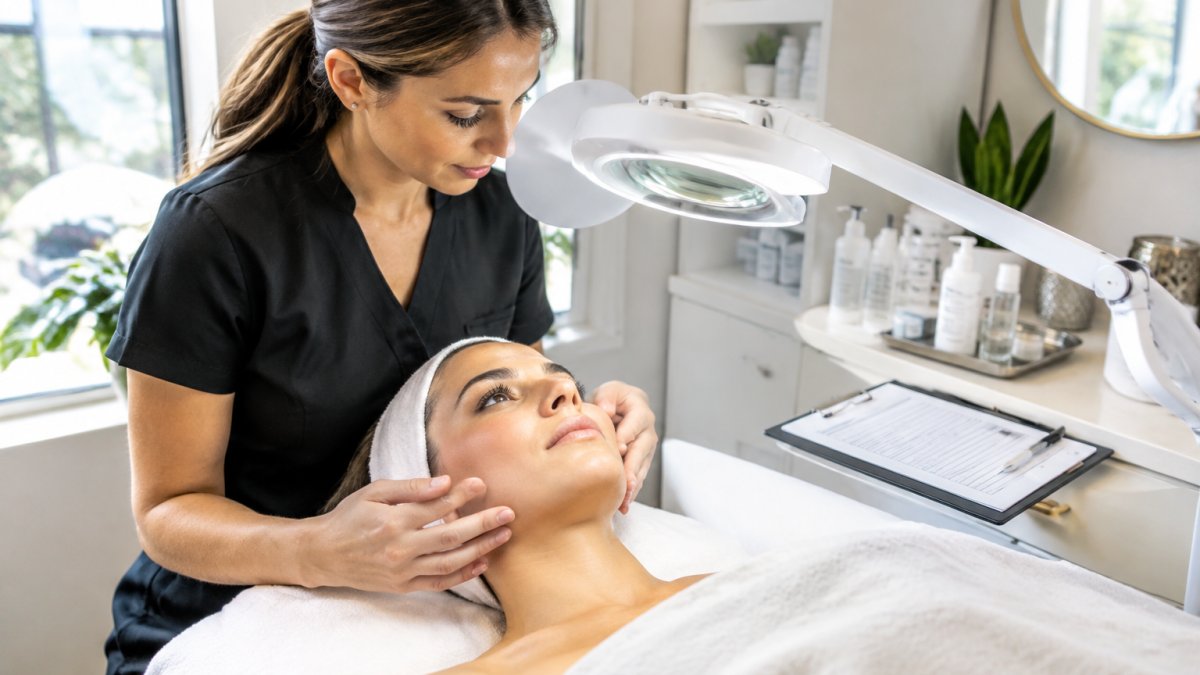
- Visual examination. We look at your face under bright, even light.
- Palpation. We gently feel for texture, oiliness, and dehydration.
- Documentation. We note findings and, with consent, take photos.
- Plan. We explain what we found and outline a treatment plan.
Visual Examination and Skin Type vs. Skin Condition
Your skin type is how your skin behaves at baseline: dry, oily, combination, or normal. Your skin condition is what is happening right now, such as redness, breakouts, or dehydration.
Both matter, and they are not the same thing. A person with oily skin can still be dehydrated, so assessing type and condition separately helps a plan address both.
Here is the first-visit workflow the article describes, step by step.
| Step | What to do |
|---|---|
| 1. Intake review | Read the form and ask follow-up questions |
| 2. Cleanse and prep | Remove makeup and surface oil |
| 3. Visual examination | Look at the face under bright, even light |
| 4. Palpation | Gently feel for texture, oiliness, and dehydration |
| 5. Documentation | Note findings and, with consent, take photos |
| 6. Plan | Explain findings and outline a treatment plan |
Professional Skin Analysis Tools and Facial Imaging
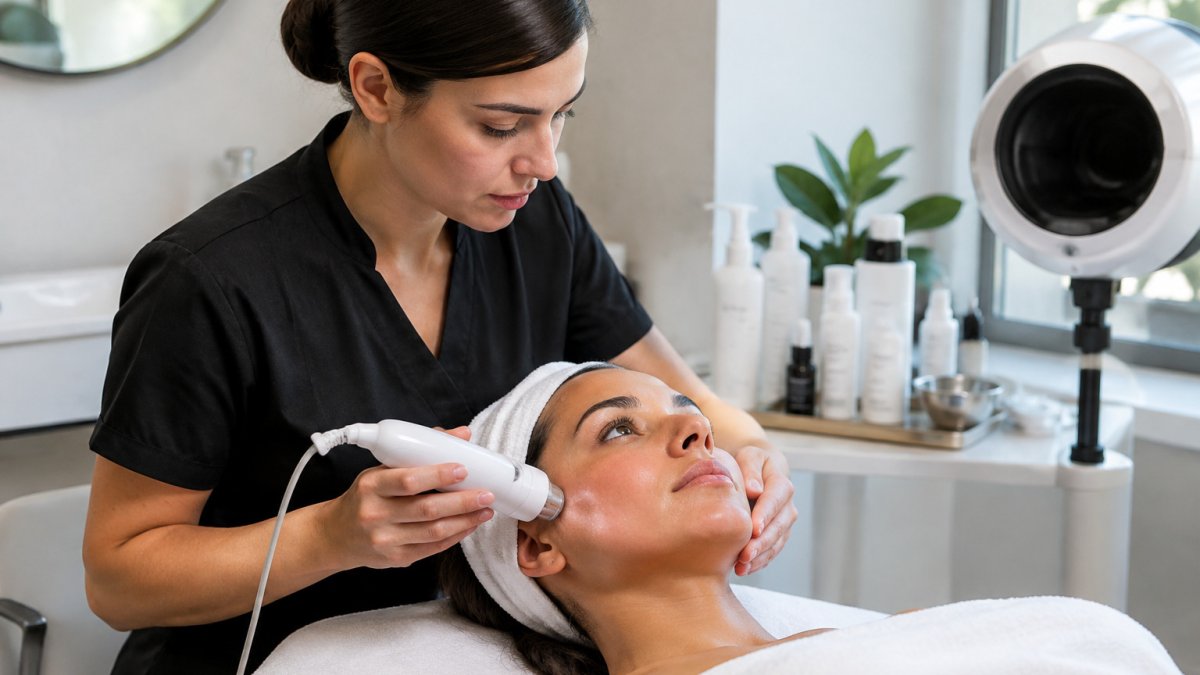
Professional skin analysis tools can help reveal what the naked eye may miss, such as a lighted magnifying lamp, a Wood's lamp, or digital facial imaging, depending on the provider.
These tools support an assessment but do not replace it. A trained esthetician interprets what the tools show, and that combination of technology and human judgment is what makes the findings useful.
In-Person Assessment vs. Selfie-Based AI Analysis
Selfie-based AI skin analysis apps are convenient, but they work from a single photo. Lighting, camera quality, and filters can all skew the result.
In-person assessment allows a provider to feel texture, ask questions, and see skin in controlled light. AI tools are best treated as a starting point at most, and a hands-on professional assessment is generally considered the standard for building a treatment plan.
Privacy, Consent, and Handling Facial Images
Facial images are sensitive. Consent should be requested before any photo is taken, with an explanation of how it will be used and how it will be stored. Declining photos should not prevent a full assessment.
Ask any spa how it handles your images before you book. A clear answer is a good sign.
When Findings Call for a Dermatologist Referral
An esthetician is not a doctor. Certain findings need a medical professional, and a provider should say so directly.
Seek a dermatologist referral if you notice:
- A mole that is new, changing, or irregular
- Persistent redness or a sore that will not heal
- Sudden, severe breakouts or reactions
- Pain, swelling, or bleeding you cannot explain
A referral is appropriate care in these situations. If you are weighing whether professional skincare is worth it, our honest answer on whether professional skincare is worth it covers what estheticians can and cannot do.
Book Your First Skin Analysis in Franklin Square
Ready to start? Booking a skin analysis in Franklin Square is simple, and it is the best way to get a plan built for your skin.
ToniRoc Beauty offers a range of professional beauty services with a focus on customized client care and a personalized treatment experience.
- Customized care: a focus on tailoring services to the individual client.
- A dedicated team: a professional team committed to client care.
If you are still choosing where to go, our guide on how to find the best facial spa near me breaks down what to look for. You can browse the range of services offered, or book now to schedule an appointment.
Frequently Asked Questions
What should a comprehensive skin analysis include?
A full skin analysis covers more than a quick look at your face. Expect an intake form and consultation questions about your skin history, current routine, medications, allergies, and sensitivities. A visual examination under good lighting and magnification typically notes skin type, condition, hydration, texture, pores, redness, and areas of focus. Some spas add facial imaging or a digital tool, and a session often ends with a treatment plan and personalized recommendations.
How long does a professional skin analysis take?
Appointment length varies by provider and by what the visit includes. Plan extra time for a first visit so nothing feels rushed, and ask the provider when booking how long to set aside.
Can AI skin analysis replace an in-person consultation?
No. Selfie-based AI tools can flag visible concerns like texture, redness, or pigmentation from a photo, but they cannot feel skin, check barrier function, ask about medications, or catch contraindications. An in-person assessment lets a trained esthetician compare skin type with current condition, confirm allergies and sensitivities, and adjust the treatment plan in real time. Treat AI output as a starting point for discussion, not a replacement for a professional assessment.
What questions should an esthetician ask a new client before a facial?
Key skin analysis consultation questions include what products and actives you currently use, any allergies or sensitivities, medications such as isotretinoin or blood thinners, past reactions to treatments, and your main skin concerns and goals. The esthetician should also ask about sun exposure, smoking, water intake, and upcoming events. These answers shape the treatment plan and flag contraindications before any product touches your skin.
Your skin deserves more than a one-size-fits-all facial. If you are ready to understand what your skin actually needs, we are here to help. Get started with ToniRoc Beauty and book your first skin analysis today.